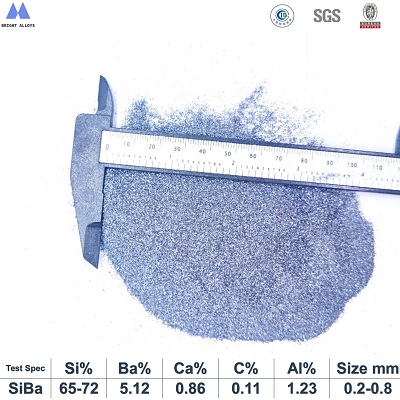


FeSiBa Inoculant 4-6% Ba – Maximum Fade Resistance for Heavy-Section Iron
Ultra-high barium ferrosilicon (4-6% Ba) for castings with extremely long solidification times. Ensures graphite nucleation throughout the mold.
| Main Composition | Si 65-70%, Ba 4-6%, Al 1.0-1.5%, Ca 1.0-1.5%, Fe balance |
| Form | Lumps/Granules/Custom |
| Application | Very heavy ductile iron castings, ingot molds, large machine parts |
FeSiBa Inoculant (Ba 4-6%) – Extended Longevity Bearing Inoculant for Heavy-Section Castings
This high‑barium ferrosilicon (4–6% Ba) is a premium‑grade inoculant engineered for demanding ductile and gray iron foundries requiring the utmost fade resistance and graphite structure control. With a barium content deliberately raised to 4‑6%, the alloy forms stable Ba‑rich silicide phases that dissolve gradually in the molten iron, providing a sustained graphitization effect for up to 45 minutes or more after treatment. Compared to standard FeSi or even 2‑4% Ba grades, this 4‑6% variant is specifically formulated to counteract graphite degeneration in extremely heavy‑section castings (e.g. >150 mm section thickness) and to guarantee consistent mechanical properties across prolonged pouring campaigns.
Core Advantages & Technical Features
- Superior Fade Resistance (Ba 4-6%): The elevated barium reservoir ensures a “slow‑release” nucleation over an extended period, maintaining high nodule count and ferritic/pearlitic balance for 30‑45 minutes. Ideal for multi‑ladle pouring of large wind turbine hubs, thick marine castings, and massive press frames.
- Maximum Nodule Count & Uniformity: Promotes an exceptionally high density of small, spherical graphite nodules, dramatically improving ductility, tensile strength, and fatigue resistance in heavy sections.
- Deep Chill Reduction: Strongly suppresses carbides (ledeburite) not only in thin walls but also in the thermal centres of bulky castings, eliminating hard spots and enhancing machinability throughout.
- Homogeneous Section Uniformity: Minimizes microstructural gradients between the surface and core of very thick castings, delivering consistent mechanical performance from skin to centre.
- Custom Sizing for All Methods: Precise particle distribution tailored to ladle, stream, in‑mould, or wire feeding – ensuring optimum dissolution and recovery with minimal fines.
Note: This product is non‑radioactive and fully complies with REACH and RoHS environmental standards. Manufactured under ISO 9001 certified processes.
Technical Specifications – Inoculant Grades (FeSiBa 4-6% & others)
Below is the chemical composition of our FeSiBa 4‑6% (highlighted) compared with other common inoculant grades. Custom compositions and impurity limits are always available on request.
Chemical Composition (Typical Values, % by weight)
| Grade / Designation | Si (%) | Ba (%) | Al (%) | Ca (%) | Fe & Others |
|---|---|---|---|---|---|
| FeSiBa 4-6% Ba (Premium) | 65-70 | 4.0-6.0 | 1.0-1.5 | 1.0-3.0(customizable) | Balance |
| FeSiBa 1-2% Ba | 70-75 | 1.0-2.0 | 1.0-1.5 | 0.6-3.0(customizable) | Balance |
| FeSiBa 2-4% Ba | 70-75 | 2.0-4.0 | 1.0-1.5 | 0.6-3.0 | Balance |
| FeSi 72% | 72-75 | – | ≤1.5 | ≤1.0 | Balance |
| FeSi 74% | 74-75 | – | ≤1.5 | 0.5-1.5 | Balance |
| FeSi 75% | 75-78 | – | ≤1.5 | ≤0.5-1.5 | Balance |
Physical & Thermal Properties (FeSiBa 4‑6%)
| Property | Typical Value / Range | Remarks |
|---|---|---|
| Melting Range (Solidus/Liquidus) | 1180°C - 1320°C (2156°F - 2408°F) | Higher barium content slightly lowers melting point vs. standard FeSi, promotes rapid dissolution |
| Specific Gravity (Density at 20°C) | 3.1 - 3.4 g/cm³ | Marginally lighter than lower Ba grades, aiding uniform dispersion |
| Bulk Density | Approx. 1.7 - 2.1 g/cm³ (106 - 131 lbs/ft³) | Depends on particle size distribution |
| Thermal Expansion Coefficient (20-1000°C) | ~10.8 × 10⁻⁶ /K | – |
| Microstructure | FeSi₂ + BaSi₂ (enriched eutectic phases) | Barium uniformly distributed as stable silicides |
Available Particle Sizes (Customizable for FeSiBa 4‑6%)
- Late / Stream Inoculation: 0.2-0.8 mm,0.1-1mm, 0.5-1.5 mm (high flowability, low dust).
- Wire Feeding: 0.5-3 mm (consistent fill for cored wire, even dissolution).
- In‑mold / Sprue Inoculation: 1-3 mm, 3-8 mm.
Processing Note: Manufactured via controlled casting or water granulation to guarantee homogeneous composition, minimal segregation, and extremely low fines content.
Key Applications & Recommended Addition Rates – FeSiBa 4‑6%
FeSiBa 4‑6% is the preferred high‑barium inoculant for the most demanding castings where fade resistance over long dwell times is mandatory:
- Heavy Ductile Iron Castings (≥150 mm section): Wind turbine hubs, main shafts, large marine diesel components, and press bases.
Typical Addition: 0.5% – 1.0% of melt weight (dependent on base sulfur, magnesium residuals, and desired nodularity). - Massive Machine Frames & Rolling Mills: Extra‑thick press columns, machine tool beds, and rolling mill stands that require uniform hardness and freedom from micro‑shrinkage.
- ADI (Austempered Ductile Iron) Heavy Sections: Provides an exceptionally uniform as‑cast matrix, ensuring predictable response during austempering heat treatment.
- Steel Industry Ingot Molds & Stools: Enhances thermal fatigue resistance and extends service life of foundry tooling under extreme thermal cycling.
- Complex Thin‑Wall Castings with Heavy Bosses: Combines chill‑free thin sections with fully graphitized heavy junctions; perfect for large valve bodies and pump housings.
- Large Sand‑Cast Gray Iron (e.g. engine blocks, cylinder heads): Boosts tensile strength, reduces section sensitivity, and improves pressure tightness.
Note: Optimal addition rate should be fine‑tuned based on base iron composition (S, O, trace elements), target matrix (ferritic/pearlitic), and pouring conditions. We recommend foundry trials with incremental adjustments.
Packaging & Logistics – FeSiBa 4‑6% Inoculant
Packaging Options
- 1‑ton Jumbo Bags: Standard for bulk orders, with inner moisture‑proof liner.
- 25kg / 50kg Bags: For smaller foundries or trial batches.
- Custom Packaging: Big bags with pallets, stretch‑wrapped, or sealed drums available.
Logistics Information
| Parameter | Details |
|---|---|
| Minimum Order Quantity | 20 metric tons (trial orders of 5‑10 t possible upon request) |
| Lead Time | 15‑20 days after confirmation |
| Port of Loading | Tianjin, Shanghai, Qingdao (other ports on request) |
| Shipping Options | FOB, CIF, CFR, DAP, DDP |
Download Center
FAQ – FeSiBa 4‑6% High‑Barium Inoculant
❓ How does 4‑6% Ba extend fade resistance beyond that of 2‑4% grades?+
With barium content raised to 4‑6%, the alloy contains a higher volume fraction of slow‑dissolving BaSi₂ phases. These phases create a sustained supersaturation of barium in the melt boundary zone, continuously supplying active graphitizing nuclei (such as (Mn,Ba)S and complex oxy‑sulfides). The result is a marked extension of the effective inoculation window — typically 45 minutes or longer — which is critical for very large castings where pouring takes multiple ladles and prolonged solidification. This “barium reservoir” effect is far more pronounced than in 2‑4% Ba alloys, making 4‑6% the preferred choice for sections >150 mm.
❓ What is the optimal base sulfur range for FeSiBa 4‑6%?+
FeSiBa 4‑6% performs exceptionally in irons with base sulfur between 0.008% and 0.020%. The abundant barium readily combines with sulfur and manganese to form a high density of effective (Mn,Ba)S nucleation sites. Even at very low sulfur (<0.005%), the alloy still outperforms standard FeSi due to its intrinsic graphitizing power, but for best results a controlled sulfur addition (e.g. 0.01‑0.015%) is recommended. Our application engineers can advise on desulfurization or slight sulfur adjustments to maximise nucleation.
❓ Is FeSiBa 4‑6% only for heavy sections, or also suitable for thin‑wall castings?+
While the primary strength of 4‑6% Ba lies in heavy‑section fade resistance, it is equally powerful in eliminating chill in thin‑wall castings. In complex geometries with both thick and thin regions (e.g. housings with ribs and heavy bosses), this grade ensures complete carbide‑free microstructure even in rapidly cooling edges. For purely thin‑wall production, a finer particle size (e.g. 0.2‑0.8 mm) is recommended to achieve rapid dissolution and strong chill reduction without over‑inoculation.
❓ How does FeSiBa 4‑6% compare with zirconium or rare‑earth based inoculants?+
Zirconium inoculants are excellent for controlling nitrogen‑related porosity and promoting ferritic structures, but their fade resistance is moderate. Rare earths (Ce, La) provide strong nucleation but can be more hygroscopic and expensive. FeSiBa 4‑6% offers the best cost‑to‑performance ratio for extended fade resistance, especially in heavy ductile iron. Barium’s slow‑release mechanism yields a very high nodule count and consistent structure over long holding times. For nitrogen‑sensitive melts, a combination with slight Zr might be recommended; we can supply tailored alloys upon request.
Is it possible to entrust a third-party inspection to check the quality before shipment? +
Certainly, we support third-party inspections by internationally recognized quality inspection agencies such as SGS and BV to verify product quality before shipment. The inspection covers product appearance, weighing, dimensions, and chemical composition analysis. The entire inspection process will be documented with photos and written records, which will be provided to you together with the final inspection report. This ensures you have no concerns regarding product quality.
❓ Does the higher barium content require special storage conditions?+
FeSiBa 4‑6% exhibits very low hygroscopicity — similar to standard FeSi — but to preserve surface quality and flowability we recommend storage in a dry, covered area (≤60% relative humidity). Keep in original sealed bags with moisture‑proof liner. For bulk silos or long‑term storage, periodic testing of fines and moisture content is advised. If the material becomes damp, drying at 80‑100°C for 1‑2 hours restores its performance. Avoid exposure to rain or condensation.
❓ Is it beneficial to combine FeSiBa 4‑6% with a late‑stage inoculant?+
Absolutely. Many foundries use FeSiBa 4‑6% as a primary ladle inoculant to secure long‑term fade resistance, and complement it with a small addition (0.1‑0.2%) of a strong late‑stage inoculant (e.g. FeSiZr or a rare‑earth mix) just before pouring. This “duplex” practice combines the sustained nucleation of barium with an extra nucleation boost at the final moment, achieving the highest nodule counts and eliminating any surface chill. We can advise on compatible combinations based on your casting portfolio.
Why Choose Our FeSiBa Inoculant
20+ Years Experience
Specialized in ferroalloy production with deep industry knowledge
Strict Quality Control
Every batch tested to ensure consistent composition and performance
Global Delivery
Reliable logistics network ensuring timely delivery worldwide
Quality & Production Showcase
Explore our quality control process, production facilities, and customer interactions
Different Inoculants and Mold-Powders Comparison
Loading product overview...
Related Products
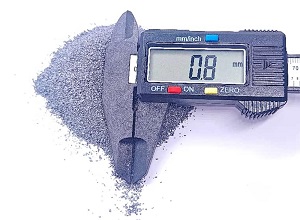
Ferro Silicon Inoculant
Si 72-76%,Al 0.3-1.5%,Ca 0.5-1.5%,Mn≤0.4% and customizable chemistries with particle (0.2-1mm,0.2-0.8mm,1-3mm,3-8mm)options.
View Details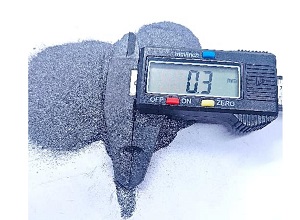
Ferro Silicon Barium Mold Powder
Barium 1-2%,2-3%,Calcium 1-3% available in 0-0.3mm more sizes.
View Details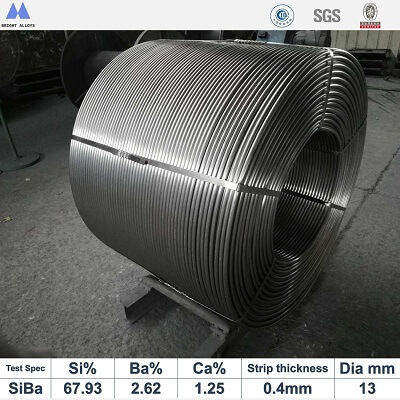
Inoculant Coredwire
FeSi Based Si 65-72%,Ba 1-4%,Ca 0.8-2%,Al ≤1.5% (customizable for specific iron types).
View DetailsReady to Order or Need More Information?
Contact our technical sales team for pricing, samples, or application advice tailored to your specific needs.
Contact Us Today