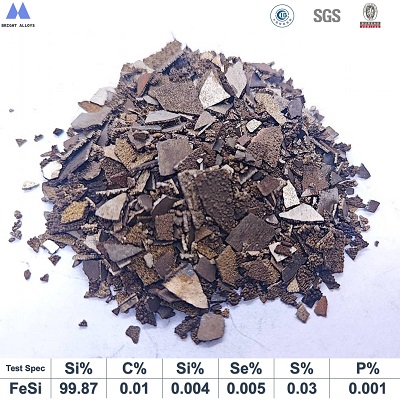


Manganese Metal Flake – High-Purity Electrolytic Manganese (Mn ≥99.7%) for Steel, Battery & Chemical Industries
Premium electrolytic manganese metal in flake form with minimum 99.7% manganese content, ultra-low impurities (C ≤0.04%, S ≤0.05%, P ≤0.005%, Fe+Se+Si ≤0.2%). Essential for stainless steel, specialty alloys, lithium-ion battery cathodes, and high-purity manganese chemicals.
| Main Composition | Mn ≥99.7%, C ≤0.04%, S ≤0.05%, P ≤0.005%, (Fe+Se+Si) ≤0.2% |
| Form | Flakes (irregular, thickness 1-3 mm), 10-100mm irregular flake |
| Application | Steelmaking (stainless, HSLA), aluminum alloys, battery cathode precursors (LiMn2O4, NMC), manganese chemicals, welding electrodes |
| Standard | GB/T 2774-2016 (EMn99.7), ASTM A601, ISO 8954-3 |
Manganese Metal Flake – Product Overview
Manganese Metal Flake (electrolytic manganese metal) is a high-purity form of manganese produced by electrolysis of manganese sulfate solution. Our Mn ≥99.7% flakes feature extremely low impurities (C, S, P, Fe, Se, Si) making them the preferred raw material for critical metallurgical and battery-grade applications. The flake morphology ensures rapid dissolution in molten steel and easy handling in chemical processes.
Product Core Advantages
- Ultra-High Purity: Minimum 99.7% Mn with strict control over harmful elements like C, S, P, Se – ideal for demanding stainless steel and battery precursor synthesis.
- Electrolytic Process: Consistent quality, uniform flake thickness, and high chemical reactivity.
- Versatile Application: Essential for 200-series stainless steel, special alloys, high-purity manganese sulfate for cathodes, and welding fluxes.
- Sizing: Available in as-produced flakes.
- Stable Supply: Produced in modern electrolytic plants with strict quality control from electrolyte to finished product.
Typical Application Areas
Manganese Metal Flake is a cornerstone material in modern metallurgy and energy storage:
- Stainless & Specialty Steels: Key alloying element in 200-series stainless (replaces nickel), high-strength low-alloy (HSLA) steels, and manganese-aluminum alloys.
- Battery Materials: Dissolved to produce high-purity manganese sulfate (MnSO4·H2O) for LiMn2O4 (LMO) and lithium nickel manganese cobalt oxide (NMC) cathodes.
- Aluminum Alloys: Used in 3xxx and 4xxx series alloys to improve strength and corrosion resistance.
- Chemical Industry: Raw material for manganese acetate, manganese carbonate, and other organic manganese compounds.
- Welding Electrodes: Added to fluxes and coating formulations to enhance arc stability and mechanical properties.
For specific application guidance or custom specifications, contact our technical team for personalized recommendations based on your production requirements.
Technical Specifications – Manganese Metal Flake & Common Grades
Our Manganese Metal Flake (EMn-99.7) is produced to meet international standards with strict quality control. Below is the chemical composition of our primary grade compared with other common industrial grades.
Chemical Composition (Typical Values, % by weight)
| Grade / Designation | Mn (%) | C (%) | S (%) | P (%) | Fe+Se+Si (%) | Typical Application |
|---|---|---|---|---|---|---|
| EMn-99.7 (Flake) | ≥99.7 | ≤0.04 | ≤0.05 | ≤0.005 | ≤0.2 | Battery grade, stainless, high-purity alloys |
| EMn-99.5 | ≥99.5 | ≤0.08 | ≤0.10 | ≤0.01 | ≤0.3 | High-grade steel, welding |
Physical Properties
| Property | Value | Unit |
|---|---|---|
| Melting Point | 1244 | °C |
| Density (at 20°C) | 7.43 | g/cm³ |
| Appearance | Silvery-gray metallic flakes, irregular shape | - |
| Flake Thickness | 1–3 mm (typical) | - |
| Bulk Density (loose flakes) | 2.8–3.2 | g/cm³ |
Available Sizes
- As-produced Flakes: 1-3 mm thickness, 10-100 mm irregular length (standard)
Application Guidelines – Manganese Metal Flake
Manganese Metal Flake is a versatile high-purity material with the following primary applications:
Steel & Superalloys
As a vital alloying element in stainless steel (200-series), wear-resistant steel (Hadfield manganese steel), and HSLA steels. Mn improves strength, toughness, and work hardening. Ultra-low P and S content prevent hot shortness and improve final properties.
Lithium-ion Battery Cathodes
Dissolved in sulfuric acid to produce high-purity manganese sulfate (MnSO4·H2O) suitable for LMO and NMC cathode precursors. The extremely low levels of impurity metals (Fe, Cu, Ni, etc.) are essential for long cycle life and safety of EV batteries.
Non-Ferrous Alloys
Added to aluminum alloys (e.g., 3003, 3104) to increase strength and corrosion resistance. Also used in copper-manganese alloys for damping applications.
Welding & Fluxes
Incorporated into electrode coatings and submerged arc welding fluxes to improve arc stability, deoxidation, and mechanical properties of the weld metal.
Chemical Intermediates
Raw material for manufacturing manganese acetate, manganese carbonate, manganese chloride, and other specialty chemicals used in catalysts, fertilizers, and animal feed.
Typical Addition Rates
In stainless steel production, addition rates range from 6% to 16% depending on the grade. For aluminum alloys, typically 0.5% to 2%. Our technical team can recommend optimal sizing (flake vs. granule) to maximize recovery and minimize oxidation losses.
Packaging & Logistics – Manganese Metal Flake
Packaging Options
We offer various packaging solutions to meet different customer requirements and ensure product integrity during transportation, especially important for high-purity grades sensitive to oxidation/moisture:
- 1‑ton Jumbo Bags: Common option, easy to handle with standard equipment, optional inner PE liner for moisture protection.
- 25kg / 50kg Multilayer Paper Bags: For smaller orders or laboratory/pilot use, with sealed liner.
- Custom Packaging: We can accommodate special packaging requests including vacuum-sealed drums, small cartons, or aseptic bags for battery-grade material requiring ultra-low moisture.
Logistics Information
| Parameter | Details |
|---|---|
| Minimum Order Quantity | 10 metric tons (less for trial orders, subject to availability) |
| Lead Time | 15-20 days after order confirmation |
| Port of Loading | Main Chinese ports (Tianjin, Shanghai, Qingdao, Huangpu) |
| Shipping Options | FOB, CIF, CFR, DAP (depending on destination) |
| Payment Terms | T/T, L/C at sight, or negotiable |
Download Center
Access our technical documentation for detailed product information:
Frequently Asked Questions – Manganese Metal Flake
Is it possible to entrust a third-party inspection to check the quality before shipment? +
Certainly, we support third-party inspections by internationally recognized quality inspection agencies such as SGS and BV to verify product quality before shipment. The inspection covers product appearance, weighing, dimensions, and chemical composition analysis. The entire inspection process will be documented with photos and written records, which will be provided to you together with the final inspection report. This ensures you have no concerns regarding product quality.
What is the difference between electrolytic manganese flake and ferromanganese? +
Electrolytic manganese flake is pure manganese (≥99.7% Mn) produced via electrowinning, with very low carbon and impurities. Ferromanganese is an alloy of manganese and iron (typically 65-80% Mn, balance Fe) produced in a blast furnace. Pure manganese flake is used when iron contamination must be avoided, such as in aluminum alloys, certain stainless steels, and battery chemicals.
Can Manganese Metal Flake be used directly for battery cathode production? +
Not directly. The flake is first dissolved in sulfuric acid to produce high-purity manganese sulfate (MnSO4·H2O), which is then used as precursor for cathode materials like LiMn2O4 or NMC. Our 99.7% purity with extremely low transition metals (Ni, Cu, Co) ensures the final battery material meets stringent quality requirements.
What particle size is recommended for aluminum alloying? +
For aluminum melting, crushed granules (2-15 mm or 5-20 mm) are typically preferred over fine powder to minimize oxidation loss and improve recovery. Flakes can also be used but may require longer melting time. We can supply custom-sized material to match your furnace practice.
Do you provide a certificate of analysis with each shipment? +
Absolutely. Every batch of Manganese Metal Flake is tested in our ISO 17025 accredited laboratory, and a Certificate of Analysis (COA) showing Mn, C, S, P, Fe, Se, Si, and other trace elements is provided with the shipping documents. Additional impurity testing (e.g., Pb, Cu, Ni for battery grade) can be arranged upon request.
What is your production capacity for Manganese Metal Flake? +
We have an annual production capacity exceeding 25,000 metric tons of electrolytic manganese metal, including standard 99.7% and battery-grade purity. We can accommodate both containerized and bulk vessel shipments with consistent quality.
Do you offer special packaging to maintain purity and prevent oxidation? +
Yes, for high-purity and battery-grade manganese, we recommend moisture-proof liners, vacuum-sealed bags, or argon-filled drums to minimize oxidation during transit. Please discuss your specific requirements with our sales team to ensure the material arrives in perfect condition.
Why Choose Our Manganese metal Flake
20+ Years Experience
Specialized in ferroalloy production with deep industry knowledge
Strict Quality Control
Every batch tested to ensure consistent composition and performance
Global Delivery
Reliable logistics network ensuring timely delivery worldwide
Quality & Production Showcase
Explore our quality control process, production facilities, and customer interactions
Related Products
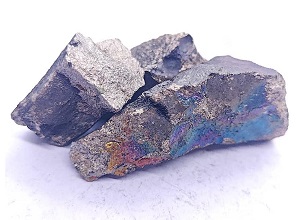
Silicon Manganese
Mn60/Si14, Mn60/Si25, Mn60/Si28, Mn63/Si25, Mn65/Si17, Mn65/Si25,10-60mm or tailored sizing.
View Details
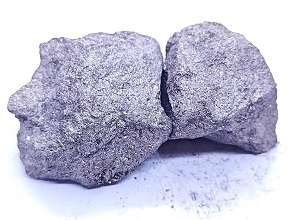
Silicon Metal
Various grades 97/441/553/1101/331 with Si 97-99.99% high-purity silicon metal lumps 10-100mm or tailored powders,multiple particle sizes and specifications.
View DetailsReady to Order or Need More Information?
Contact our technical sales team for pricing, samples, or application advice tailored to your specific needs.
Contact Us Today